
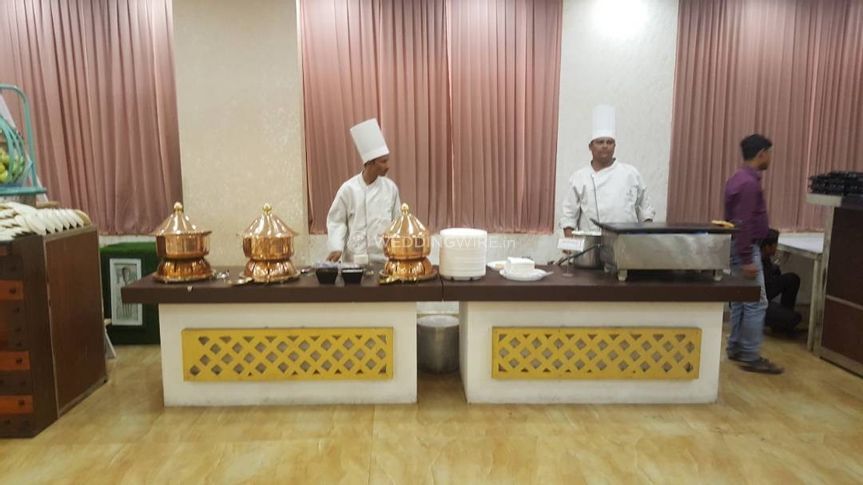
A Practical Guide To Multi-Course Reception Food Service
A multi-course reception succeeds when food service feels effortless from the guest’s perspective. Each dish should arrive at the right temperature, courses should follow a comfortable rhythm, and the catering team should remain prepared for dietary requests, speeches, photographs, and changes in the event schedule.
The process involves much more than choosing a menu. Planners must coordinate kitchen production, table service, buffet replenishment, guest movement, crockery, staffing, and communication between the caterer and event host. A clear plan keeps the dining experience polished while allowing guests to enjoy the celebration.
At Pearl Grand Banana Tree in Sahibabad, Ghaziabad, reception planners can combine vegetarian multi-cuisine catering with event décor, hospitality support, and flexible banquet spaces. Its location near Kaushambi Metro Station and Pacific Mall also makes it convenient for guests arriving from Delhi, Noida, and nearby parts of the National Capital Region.
Define The Service Style First
Begin by deciding how guests will receive each course. A plated meal provides a formal experience with carefully timed service, while a buffet gives guests greater choice and can suit larger gatherings. Family-style platters create a shared dining atmosphere, whereas food stations work well for contemporary receptions with varied cuisines.
The selected format should match the guest count, venue layout, menu complexity, and level of formality. Plated service requires more servers and precise coordination, while a buffet needs attractive presentation, queue management, and regular replenishment. For a large vegetarian reception, a hybrid arrangement can be effective: plated starters, a managed buffet for main courses, and served desserts.
Confirm the service style before finalising table layouts or staffing. Changing from buffet to plated service at the last moment can affect kitchen preparation, equipment, crockery, and the timing of every programme element.
Build A Menu Around Guest Experience
A multi-course menu should offer variety without overwhelming the palate. Consider the progression from welcome beverages and appetisers to soups, salads, main dishes, breads, rice, accompaniments, desserts, and beverages. Rich dishes are best balanced with fresh salads, mildly seasoned vegetables, and lighter options.
For a vegetarian menu, include a thoughtful mix of North Indian, South Indian, Asian, Continental, or regional specialities rather than presenting too many similar gravies. Label dishes clearly, particularly when they contain nuts, dairy, gluten, strong spices, or common allergens. A tasting session helps the host assess flavour, portion size, presentation, and serving temperature.
| Course | Planning Focus | Service Note |
|---|---|---|
| Welcome Drinks | Refreshing, easy-to-hold options | Serve before guests reach the dining area |
| Starters | A mix of fried, grilled, and fresh items | Replenish in small batches |
| Soup Or Salad | Light transition between courses | Clear used crockery promptly |
| Main Course | Balanced breads, rice, vegetables, and gravies | Keep popular dishes continuously available |
| Desserts | Variety in texture and temperature | Use a separate dessert presentation area |
| Tea And Coffee | Suitable for post-meal conversation | Schedule after photographs or speeches |
Portions should be planned according to the event duration and guest profile. Children, elderly guests, and attendees with specific dietary preferences may need simpler or milder choices. Keep a small reserve of high-demand items so the final guests receive the same quality as those served first.
Synchronise Kitchen And Event Timings
Food service should be integrated with the reception programme. Share the schedule for guest arrival, family photographs, speeches, performances, cake cutting, and any ceremonial moments with the catering manager. This prevents servers from clearing plates during an important announcement or releasing the main course while many guests are away from their tables.
Create a course-by-course timeline that includes preparation, holding, service, clearing, and replenishment. A practical event schedule should allow a short buffer between major activities. Use this reception timeline guide to coordinate meal service with the wider flow of the celebration.
The kitchen and floor team should have one designated point of contact. That person can authorise course releases, communicate delays, and respond to the host without creating confusion among multiple staff members. A short briefing before guests arrive should cover the menu, service order, table numbers, special requests, and emergency procedures.
Prepare For Dietary And Service Requirements
Collect dietary information during the RSVP process whenever possible. Record allergies, religious restrictions, low-spice preferences, vegan requirements, and requests for meals suitable for children or elderly guests. This information should reach the chef, service captain, and host rather than remaining with a single planner.
Special meals should be prepared and identified carefully. Servers need to know which table or guest requires a particular dish without announcing personal details publicly. Separate serving utensils and clear kitchen labelling help reduce the risk of cross-contact.
Plan for practical service requirements as well. Keep water available throughout the meal, provide adequate cutlery for every course, and arrange spare napkins and plates close to the service area. If the reception includes senior guests or people with limited mobility, ensure their tables are easy for servers to reach.
Coordinate The Dining Layout
The room arrangement directly affects the pace of food service. Leave enough space between tables for servers carrying full trays, and avoid placing buffet counters where they block entrances, stage sightlines, or pathways to the washrooms. At a large banquet venue, separate guest circulation from staff movement wherever possible.
Use table numbers or clearly defined zones to help the catering team deliver meals accurately. A seating chart is particularly useful for plated service, family groups, VIP guests, and special dietary requests. If a buffet is planned, consider duplicate counters for popular dishes or separate stations for starters, main courses, breads, and desserts.
Décor should enhance the dining area without interfering with service. Low centrepieces preserve conversation and sightlines, while stable table settings prevent spills. Before the reception begins, inspect the dining space with the venue coordinator, caterer, decorator, and host so that small layout problems can be corrected early.
Make Responsibilities Clear Before Guests Arrive
A successful reception depends on defined responsibilities rather than last-minute assumptions. Assign one person to represent the host, one service captain to manage catering staff, and one venue coordinator to handle room, equipment, and timing matters. Their contact details should be shared with the relevant teams before setup begins.
Use the following planning actions to create a dependable food service operation:
- Confirm the final guest count, menu, meal format, and dietary requirements several days before the reception.
- Approve the course sequence, serving portions, table plan, and kitchen-to-floor communication process.
- Schedule a tasting and document any changes to seasoning, presentation, ingredients, or portion sizes.
- Brief servers on VIP tables, children’s seating, special meals, programme timings, and clearing procedures.
- Keep a contingency plan for delayed arrivals, extra guests, power interruptions, or a change in the event schedule.
During the reception, the host should avoid managing individual service issues personally. A trained banquet team can handle replenishment, guest requests, and timing adjustments while the family remains focused on welcoming guests and enjoying the occasion.
A well-coordinated menu gives every part of the reception greater polish. When the venue, caterer, kitchen, decorators, and programme team work from the same schedule, guests experience a smooth progression from the first welcome drink to the final cup of tea.
For a multi-course wedding reception, corporate gathering, birthday, or anniversary celebration, contact Pearl Grand Banana Tree to discuss banquet space, vegetarian catering, décor, hospitality staffing, and a service plan suited to your guest list.
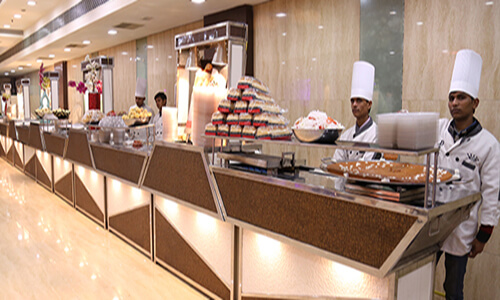
We have a specialized team of highly trained and experienced managers all from 5 stars, captains and other staff and they look after all of the needs of the guests. Our staff is dedicated, polite, courteous, neat and honest
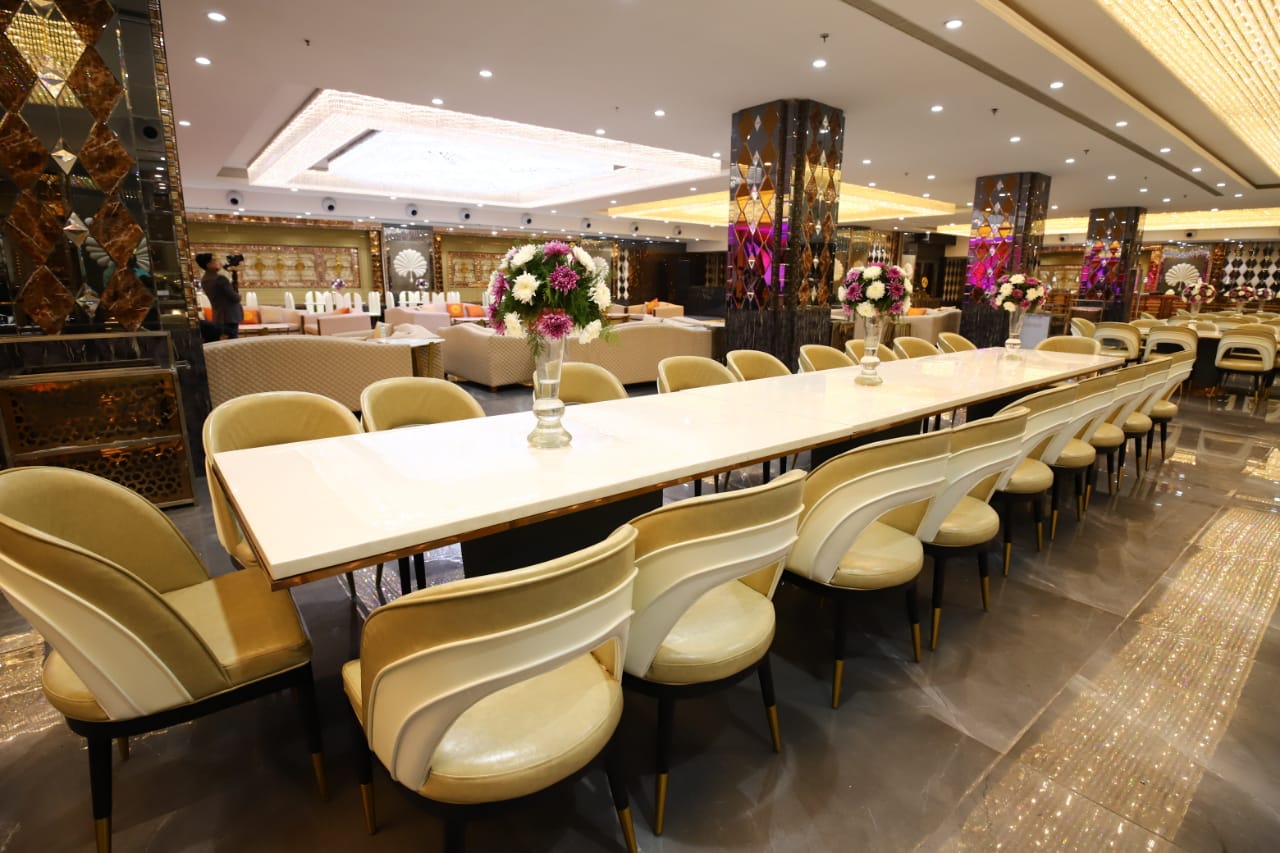
Spacious Elevators and escalated staircase is installed for convenience of our guests. All halls come with Bridle Room with lock for security of belongings of guest. Special Bar Counters

We are serving delicious snacks, some of them have been developed by our expert chefs, and they are our gift to the food industry. We serve full quantity of snacks from start till end of the function.
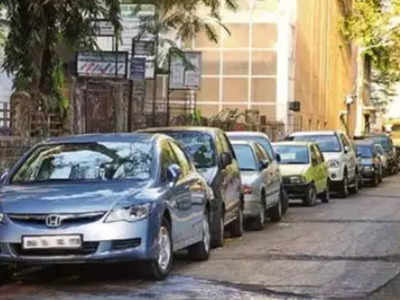
We provide ´Valet Parking´ facility at no extra cost to you. The cars of our guests shall be parked by our expert Valet parking drivers.

The richness of the ambience can be felt from the Cascading waterfalls, ornamental crystal chandeliers, beautiful Italian marble, light emitting onyx stone and ornate wood work. We have halls large enough to hold parties of 80 to 5000 guests. Beauty of our halls is unmatched in whole of East Delhi.
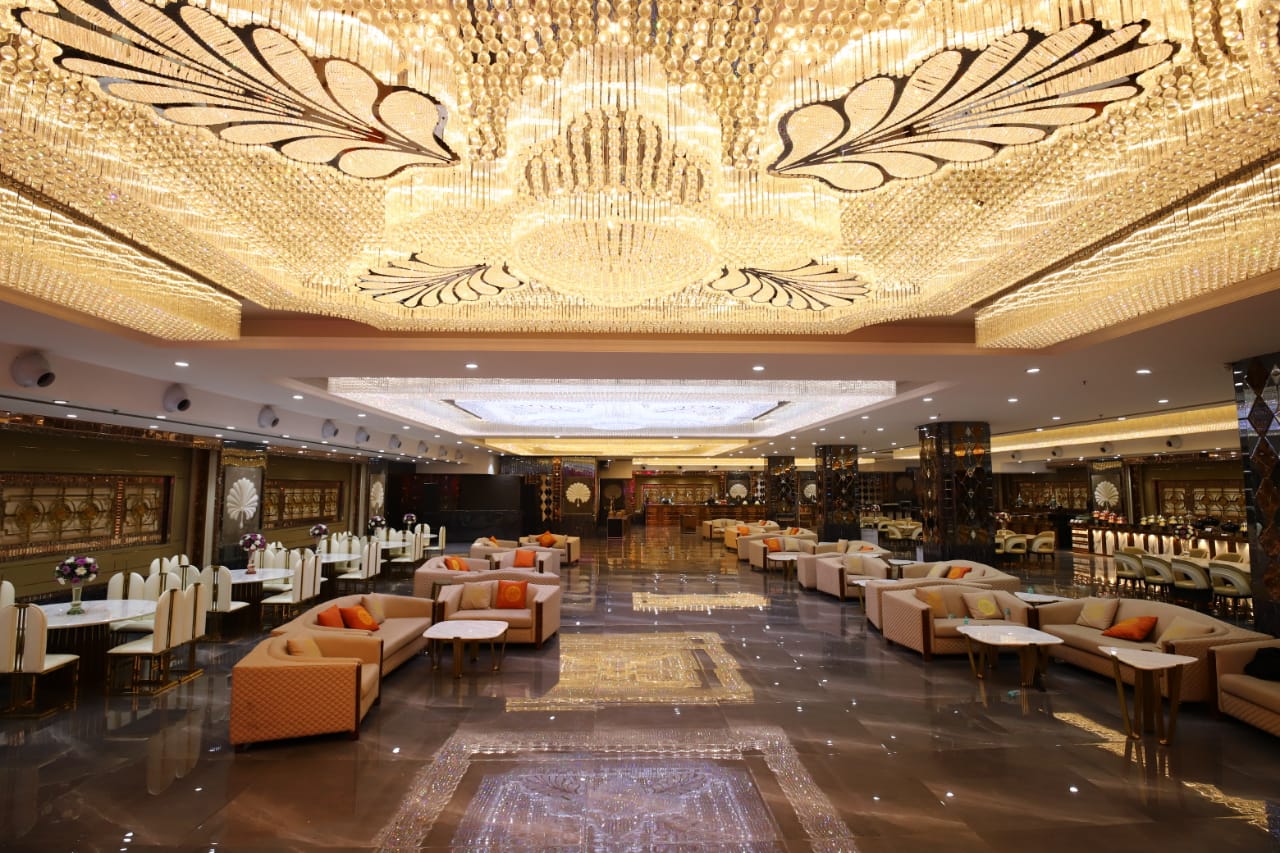
Our Banquet Halls are centrally Air-Conditioned. We run our AC on generators and hence it never stops and it is very effective in the middle of summer too.