
Punjabi And South Indian Wedding Menus That Work
A wedding menu can bring together the richness of Punjabi cooking and the refined variety of South Indian cuisine without making the buffet feel crowded or unfocused. The strongest menus create a clear progression: familiar appetisers, fragrant regional mains, balanced accompaniments, and desserts that leave guests satisfied rather than overwhelmed.
This approach suits large Indian weddings, where guests may include older relatives, children, international visitors, and people with different spice preferences. At a banquet venue such as wedding venue, careful menu planning can also work alongside décor, service timing, and the practical needs of a sizeable reception.
Start With A Clear Culinary Balance
Punjabi dishes are often associated with smoky tandoori flavours, creamy gravies, breads, and robust seasoning. South Indian food brings a different rhythm through lentils, curry leaves, coconut, tamarind, fermented batters, rice, and lighter vegetable preparations. Combining both traditions works best when each has a distinct role rather than when every dish tries to represent every region.
For example, a menu might begin with tandoori paneer, vegetable seekh kebabs, mini idlis, medu vadas, and crisp dosa bites. The main buffet could then pair dal makhani and kadai vegetables with sambar, vegetable kurma, lemon rice, and appam or dosa stations. This creates contrast in colour, texture, aroma, and richness.
A well-balanced selection may include:
- Tandoori paneer with coconut chutney and mint chutney
- Amritsari-style vegetarian kebabs with medu vada
- Dal makhani alongside sambar and rasam
- Butter naan, mini dosa, jeera rice, and lemon rice
Build The Menu Around Guest Experience
Wedding guests usually remember whether the food was easy to enjoy, served at the right temperature, and available in enough variety. Punjabi gravies can be rich, so pair them with lighter South Indian dishes such as rasam, poriyal, curd rice, or a subtly spiced vegetable stew. Likewise, tangy sambar and tamarind-based dishes benefit from creamy paneer or mild dal on the same buffet.
Australian guests in Sydney, Melbourne, and Brisbane are increasingly familiar with regional Indian food, but a wedding may still include people trying these flavours for the first time. Menu cards should use plain descriptions, such as “lentil stew with vegetables and tamarind” or “cottage cheese cooked in a clay-oven style,” rather than relying only on regional names. This makes the dining experience more welcoming without diluting its cultural character.
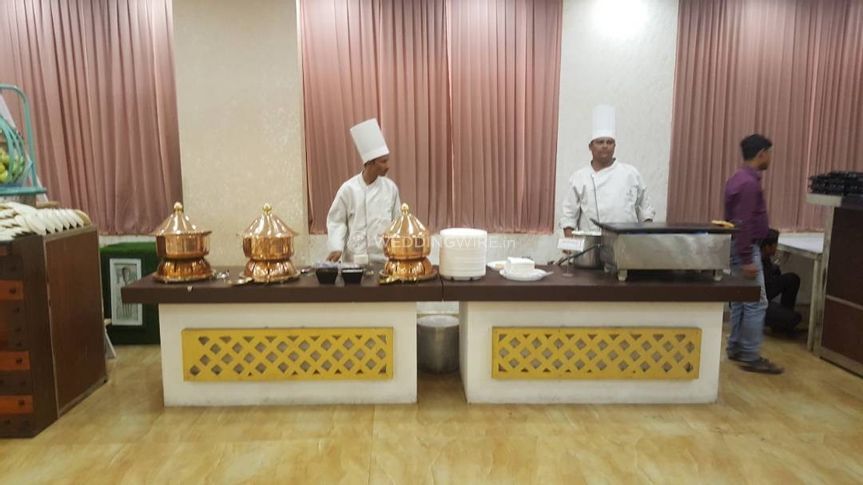
Service format also matters. Live dosa or appam stations create theatre, while chaat counters and tandoor displays add energy during the reception. However, queues can become difficult when hundreds of guests arrive together, so popular items should also be available in plated or buffet portions.
Plan For Dietary Needs And Local Standards
Vegetarian catering can offer impressive range when it includes protein, fresh produce, and filling grains rather than relying mainly on cheese and cream. Paneer, lentils, chickpeas, beans, yoghurt, dosa, idli, and vegetable curries provide substance across the menu. Vegan guests can be accommodated by using coconut milk, cashew cream, and vegetable-based sauces, with separate utensils and clearly marked dishes.
If the menu is being adapted for Australian guests or an Australian-style event, food safety and allergen communication deserve specific attention. Food Standards Australia New Zealand guidance requires businesses to manage and communicate major allergens, including peanuts, tree nuts, gluten-containing cereals, milk, sesame, soy, and sulphites. A printed allergen key and staff briefing are practical safeguards, particularly where chutneys, sweets, naan, and fried snacks share preparation areas.
Useful planning details include:
- Mark dishes containing dairy, gluten, nuts, sesame, or soy
- Provide one or two mild dishes for children and spice-sensitive guests
- Keep vegan and Jain-friendly options separate where required
- Brief servers on cross-contact risks and ingredient substitutions
Australia’s local market also affects ingredient choices. Seasonal vegetables from Victorian, New South Wales, or Queensland suppliers can support freshness and cost control, while imported spices, curry leaves, and specialty rice may require advance ordering. If a quoted package is being compared with Australian venues, remember that GST, staffing costs, transport, and venue hire can alter the final per-head price.
Match Food Timing To The Wedding Schedule
A Punjabi and South Indian menu should follow the flow of the celebration. Light snacks can be served during guest arrival, especially when photographs, ceremonies, or speeches delay the main meal. Crispy foods should be replenished in small batches, as pakoras, vadas, and dosa lose quality when left exposed for too long.
For the main meal, arrange the buffet from mild to stronger flavours, with breads and rice placed near the curries they complement. A dedicated beverage area can offer filter coffee, masala chai, fresh lime drinks, and non-alcoholic fruit coolers. Filter coffee is particularly useful for an Australian audience accustomed to café culture, while chai provides a familiar bridge between meal courses and dessert.
Desserts can continue the regional blend through gulab jamun, jalebi, kesari, payasam, coconut barfi, and mango shrikhand. Choose two or three rather than presenting every option. A small dessert tasting station often feels more polished than an overloaded sweets table.
Make The Final Menu Practical
The best menu is one the kitchen and service team can execute consistently for the expected guest count. Before confirming dishes, review preparation time, holding quality, equipment, live-counter space, and the number of staff available for replenishment. A recipe that tastes excellent when freshly cooked may be unsuitable for a large buffet if it separates, dries out, or creates long queues.
For Australian families planning a destination wedding in India, clear communication is especially valuable. Share a sample menu in advance, identify spice levels, confirm whether the package includes crockery and service staff, and check how late-night refreshments will be handled. It is also wise to confirm the venue’s policy on outside desserts, alcohol service, and dietary meals rather than assuming they are included.
A practical final structure could be:
- Arrival: mini idlis, paneer tikka, vada, chutneys, and welcome drinks
- Main meal: dal makhani, sambar, one creamy curry, two vegetable dishes, rice, and breads
- Fresh elements: kachumber, kosambari, raita, pickles, and papad
- Dessert and drinks: payasam, gulab jamun, filter coffee, chai, and fruit coolers
The finished menu should feel generous but edited. Give Punjabi dishes room to showcase smoky, buttery depth, and allow South Indian recipes to contribute freshness, acidity, fermented textures, and aromatic spice. Label every dish clearly, plan for Australian-style dietary expectations where relevant, and test the buffet sequence before the wedding day. That combination turns regional variety into a smooth, memorable dining experience.
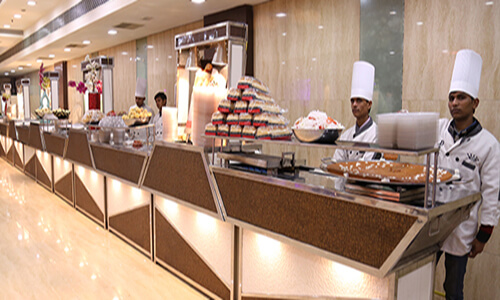
We have a specialized team of highly trained and experienced managers all from 5 stars, captains and other staff and they look after all of the needs of the guests. Our staff is dedicated, polite, courteous, neat and honest
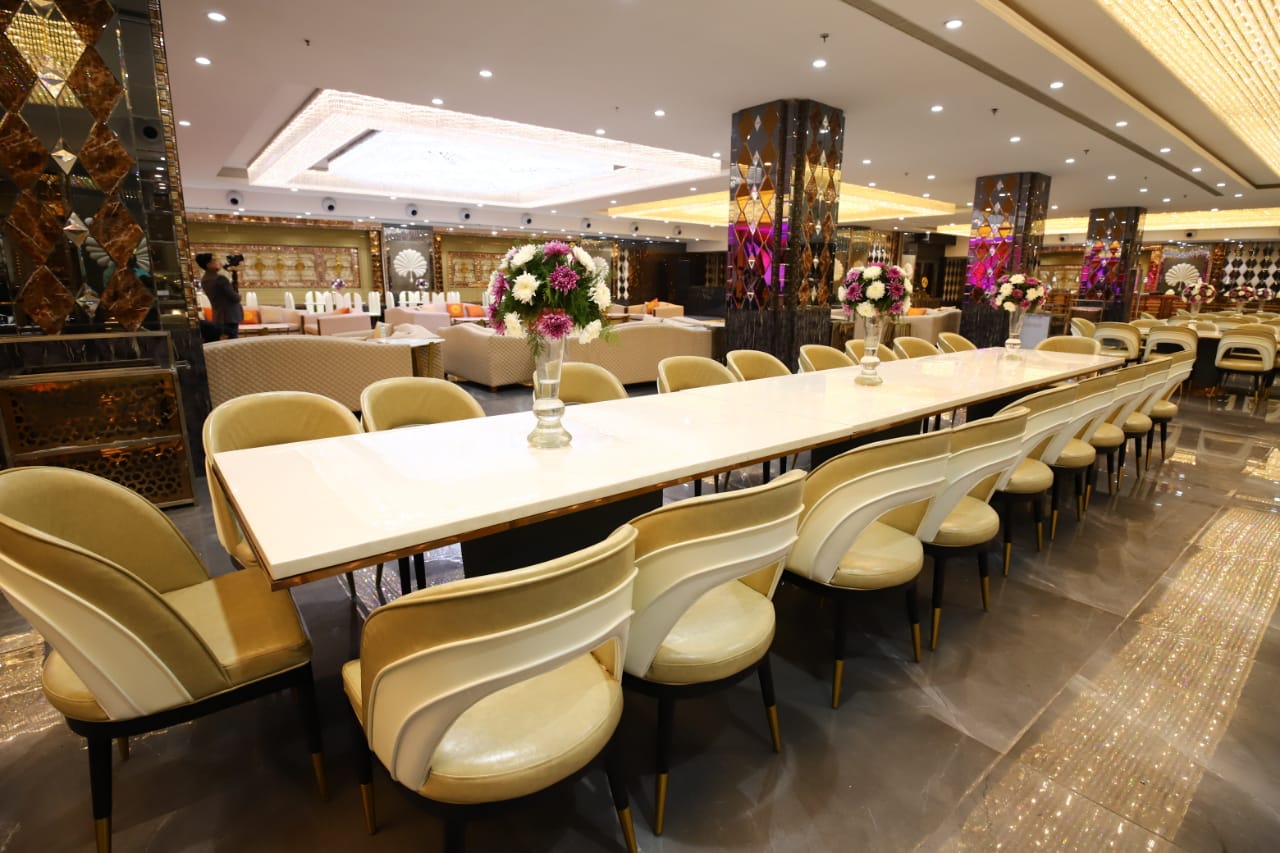
Spacious Elevators and escalated staircase is installed for convenience of our guests. All halls come with Bridle Room with lock for security of belongings of guest. Special Bar Counters

We are serving delicious snacks, some of them have been developed by our expert chefs, and they are our gift to the food industry. We serve full quantity of snacks from start till end of the function.

We provide ´Valet Parking´ facility at no extra cost to you. The cars of our guests shall be parked by our expert Valet parking drivers.

The richness of the ambience can be felt from the Cascading waterfalls, ornamental crystal chandeliers, beautiful Italian marble, light emitting onyx stone and ornate wood work. We have halls large enough to hold parties of 80 to 5000 guests. Beauty of our halls is unmatched in whole of East Delhi.
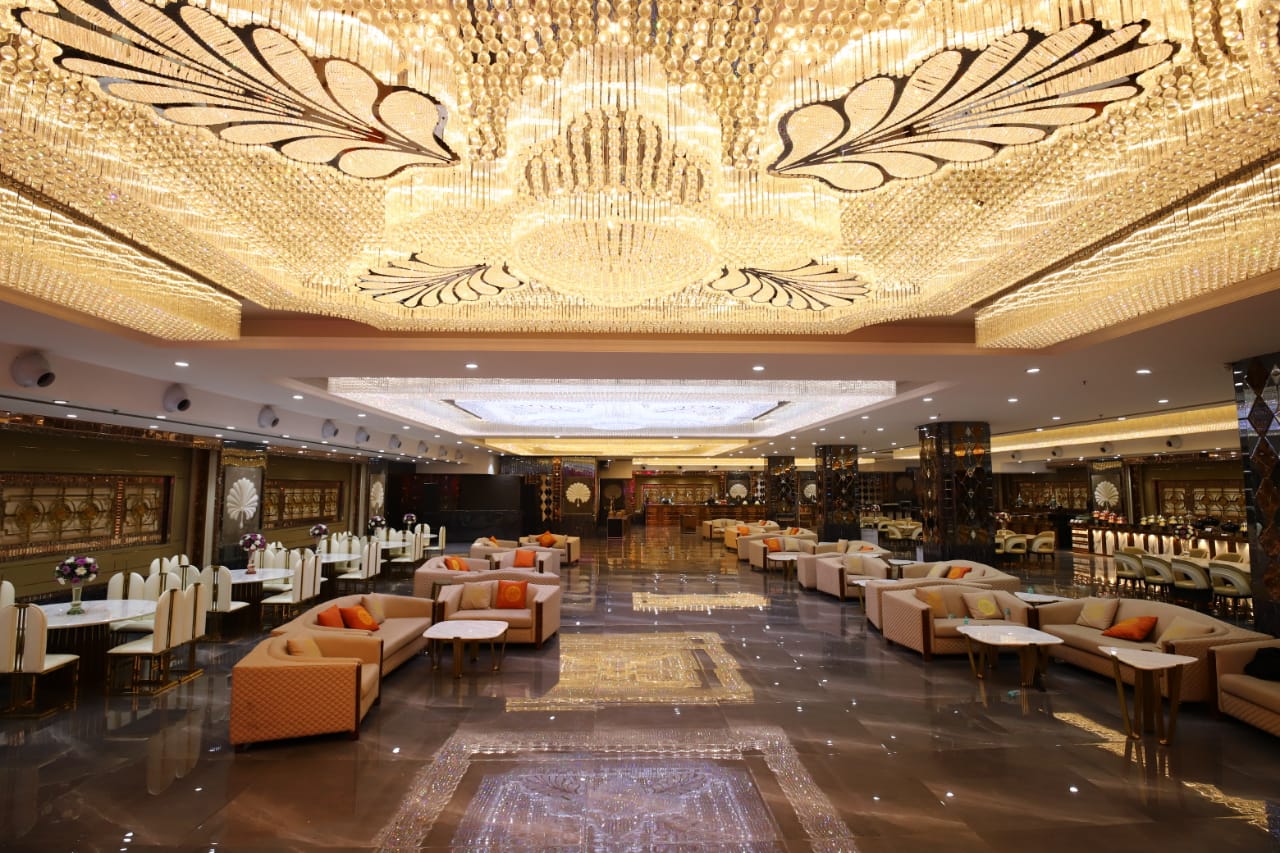
Our Banquet Halls are centrally Air-Conditioned. We run our AC on generators and hence it never stops and it is very effective in the middle of summer too.