
Designing a custom North Indian vegetarian menu
Designing a custom menu featuring North Indian vegetarian dishes is less about collecting recipes and more about creating a balanced progression. A wedding feast, birthday lunch or corporate dinner needs different pacing, but every menu should move from light snacks to rich mains, comforting breads and a sweet finish. Customisation lies in portion sizes, spice levels, dietary needs and service timing.
Australian hosts now plan many multicultural celebrations, including large Indian family events around Box Hill in Melbourne, Parramatta in Sydney and Browns Plains in Brisbane. Guests may follow a familiar veg-and-non-veg format at home while expecting clear allergen information, milder children’s options and Jain choices at a function venue. Terms such as “help yourself” and “no worries” suit the relaxed tone, but menu labels should still be precise.
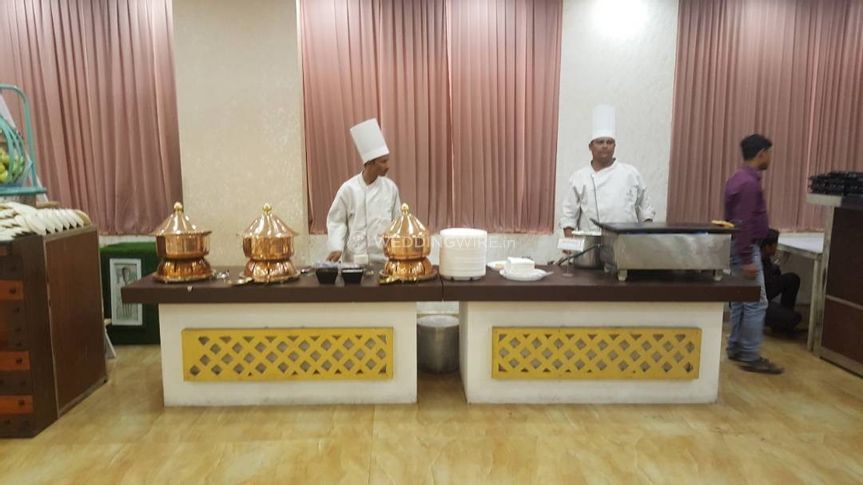
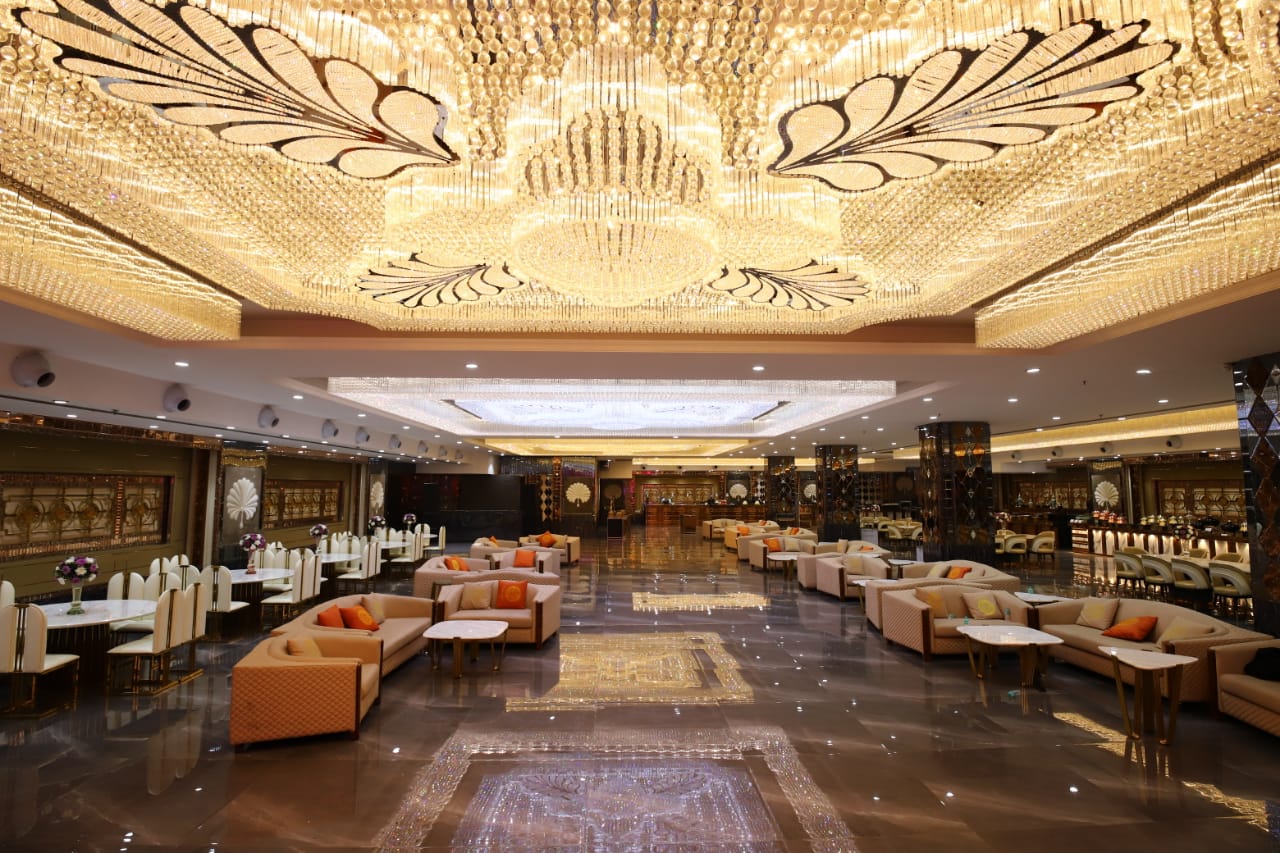
Venue presentation matters as much as the food itself. For an Indian example, the multi-cuisine vegetarian catering, décor and hospitality offered by Pearl Grand Banana Tree demonstrate how a varied menu can sit within one coordinated celebration. Located near Kaushambi Metro Station and Pacific Mall in Sahibabad, the venue also shows why transport access and guest capacity should shape the final selection.
Set the direction before choosing dishes
Begin with the event, not the dish list. For a four-hour reception, allow more time for snacks, two main courses and dessert; for a seated lunch, fewer dishes keep the meal comfortable. Record guest numbers by age, service style and meal duration. A mix of elderly relatives, children and international guests usually benefits from a buffet with clear labels rather than a long sequence of plated courses.
Map every dietary requirement before tasting. Separate paneer, milk-based sweets and wheat breads from Jain, vegan and gluten-free choices. In Australia, hosts often use “veg” casually, so menus should specify whether dairy, onion or garlic is present and include an allergen sheet for peanuts, nuts and gluten. Function venues commonly itemise room hire, food, beverages and staffing, with 10% GST generally applied.
Build a balanced regional spread
Choose one savoury anchor and develop it in two or three forms. Matar paneer can provide a mild, creamy base, dal makhani a richer tomato flavour and chole a hearty chickpea option. A lightly spiced paneer tikka or potato-filled samosa can introduce texture without overpowering the main meal. Spices should build depth rather than heat, with chilli added separately where possible.
Surround the anchor with supporting dishes that offer contrast. Naan, roti, paratha and rice create familiar bases, while kachumber, raita, chaat and a seasonal salad provide freshness. Avoid making every dish creamy or oily: a dal, a dry vegetable preparation and a dairy-based curry can offer welcome variety on the same table. Fresh herbs, lemon and pickled onions also help balance richer gravies.
Build dietary variations into the original plan rather than treating them as afterthoughts. A separate Jain dal without onion or garlic, a tofu-based main for vegan guests and a gluten-free roti can share the same flavour profile without being mistaken for standard dishes. For desserts, gulab jamun, jalebi, kheer and seasonal fruit can be selected for contrasting sweetness, temperature and texture.
Match each course to the service
Convert the dishes into a sequence that supports the event schedule rather than placing everything on the buffet at once. The following choices show how each course can be adapted without losing its North Indian character.
| Course | Possible dishes | Useful variation | Best service moment |
|---|---|---|---|
| Welcome bites | Samosa, pakora, paneer tikka | Baked or air-fried options | Arrival and cocktail period |
| Main bowls | Matar paneer, dal makhani, chole | Jain, vegan or tofu versions | Lunch or dinner service |
| Breads | Naan, roti, paratha, puri | Gluten-free roti or millet roti | Alongside main courses |
| Rice and sides | Vegetarian biryani, jeera rice, raita, kachumber | Plain rice, vegan raita or stir-fried vegetables | Main buffet |
| Sweets | Gulab jamun, jalebi, kheer | Chilled mango lassi or fruit | Dessert and late-afternoon service |
At a wedding reception, lighter snacks can be served during the welcome period, followed by a staggered buffet once the main seating begins. A haldi, mehndi or birthday function may need fewer courses but more small plates because guests are often moving between activities. For a corporate lunch, a seated rice dish, two curries, bread and one sweet provide structure without excessive food waste.
Adapt the plan for Australian events
Translate the menu into Australian service language without flattening it. Label dishes as paneer, dal, chole and kachumber rather than grouping everything under “curries,” and mark them as vegetarian, Jain or vegan where relevant. Family-style service encourages guests to sample several dishes and suits the informal “help yourself” approach common at community centres and suburban function rooms.
Plan around Australian commercial conditions as well as food preferences. Confirm the per-person package, GST, staffing, delivery, setup time and any charge for extended service. Find out whether cakes can be supplied externally, whether the kitchen is restricted, and who is responsible for replenishing buffet trays. These details prevent a carefully balanced menu from becoming difficult to serve on schedule.
Use a tasting to test temperature and consistency. Paneer should stay soft, breads should remain warm and chaat should not become soggy while waiting in a tray. Many Indian caterers in Melbourne, Sydney and Brisbane can also adjust portions and spice levels for family events. Give the caterer the final guest count, meal timing and dietary list, then keep a small buffer for guests arriving late or choosing unfamiliar dishes.
A guest-ready menu blueprint
Turn the selections into a shared production brief that the caterer, venue and host can read easily. The brief should specify service times, quantities, dietary restrictions, equipment needs and the order in which dishes should be replenished. This prevents important details from being lost between the kitchen and the event floor.
- Choose two welcome bites with contrasting textures, such as a warm savoury item and one chilled or raw preparation.
- Offer three main bowls: one rich curry, one dal or chickpea dish and one lighter vegetable preparation.
- Provide two bread choices alongside plain rice, giving guests several familiar ways to build a plate.
- Include one clearly labelled gluten-free or Jain main when the guest list requires it.
- Finish with two sweets in different styles, supported by fresh fruit or a chilled seasonal dessert.
Before printing the menu, check every label against the ingredient and allergen records, then compare the final quantities with the confirmed guest count. The practical takeaway is to finalise dietary needs, service timing and portions first; the dishes can then be refined without turning the meal into a patchwork.
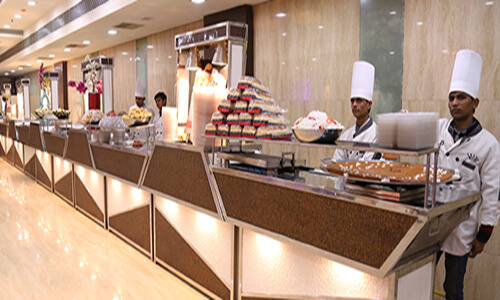
We have a specialized team of highly trained and experienced managers all from 5 stars, captains and other staff and they look after all of the needs of the guests. Our staff is dedicated, polite, courteous, neat and honest
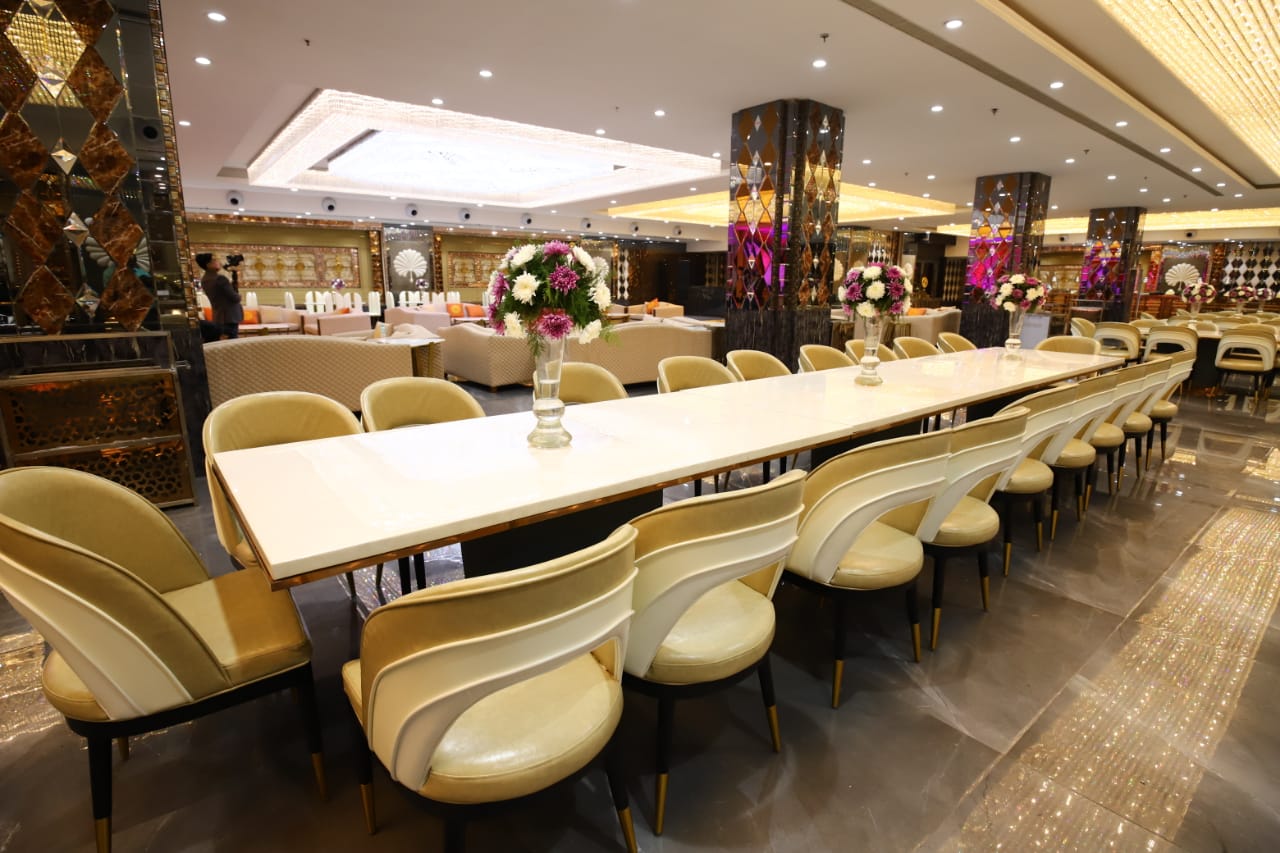
Spacious Elevators and escalated staircase is installed for convenience of our guests. All halls come with Bridle Room with lock for security of belongings of guest. Special Bar Counters

We are serving delicious snacks, some of them have been developed by our expert chefs, and they are our gift to the food industry. We serve full quantity of snacks from start till end of the function.
We provide ´Valet Parking´ facility at no extra cost to you. The cars of our guests shall be parked by our expert Valet parking drivers.

The richness of the ambience can be felt from the Cascading waterfalls, ornamental crystal chandeliers, beautiful Italian marble, light emitting onyx stone and ornate wood work. We have halls large enough to hold parties of 80 to 5000 guests. Beauty of our halls is unmatched in whole of East Delhi.
Our Banquet Halls are centrally Air-Conditioned. We run our AC on generators and hence it never stops and it is very effective in the middle of summer too.