
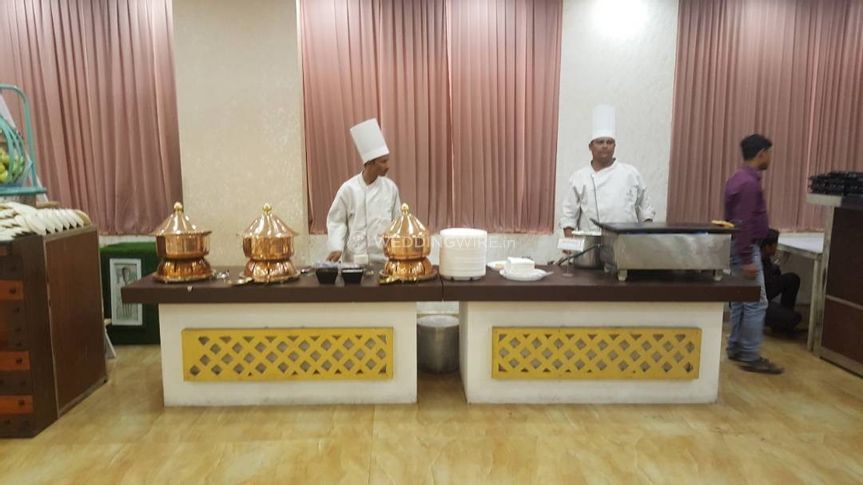
Keeping the Queue Moving at Packed-Out Australian Functions
There's a particular kind of chaos that kicks off when two hundred hungry guests eye the same chafing dish at once, and anyone who's worked a wedding in Western Sydney or a corporate do at a Brisbane riverside venue knows exactly what it looks like. The line doubles back on itself, aunties squeeze past tradies balancing loaded plates, and someone always loses a bread roll under a table. Managing a buffet line for large crowds without congestion isn't a nice-to-have. It's the difference between a relaxed arvo reception and one where half the guests are still queuing while the other half have already hit the dance floor.
Australian events lean heavily on the buffet format. From footy club end-of-season presentations in Melbourne to community celebrations in regional Queensland, the self-service spread is woven into how locals feed a crowd. The challenge isn't the food itself. It's the choreography of hundreds of people moving, choosing, balancing and returning to their seats without turning the room into a stampede.
The good news is that congestion is rarely random. It's the predictable result of a few forgotten decisions about layout, timing and communication, all of which can be sorted well before the first schnitty hits the hotplate. What follows is a field-tested approach to keeping things fluid, drawn from the realities of large-scale Australian events where space, weather and guest behaviour all play a part.
The aim isn't just shorter queues. It's a calmer room, faster table turnover at the bar, and guests who actually remember the food for the right reasons rather than the wait. Done well, buffet service disappears into the background. Done poorly, it becomes the story of the night.
Mapping the Room Before the First Plate is Piled
Layout is the single biggest lever in buffet line control, and it has to be decided long before the guests walk through the door. At large Australian venues — think the big function rooms around Parramatta, South Bank or the Adelaide Hills wineries — the floor plan dictates everything that follows. A U-shaped or serpentine configuration almost always beats two parallel lines, because it spreads guests along a longer stretch and forces a single direction of travel.
Sight lines matter too. If guests can see the full spread from their table, the rush starts before the line is even open. Putting the buffet just out of immediate view, around a corner or behind a low partition, slows the stampede and gives staff time to refresh dishes. Stations should also be wide enough for two people to pass without touching plates, which in practice means at least 1.2 metres of clear corridor.
- Place the beverage station on the opposite side of the room from the mains, so guests can't shortcut the queue.
- Keep cutlery, napkins and plates at the front of the line, never the back.
- Use floor markers sparingly — a chalk arrow on the carpet works better than a printed sign taped to a trestle.
- Position the exit lane well away from the entrance so empty and incoming traffic don't collide.
- Build in a "re-pile" zone behind the spread where staff can restock without crossing guest paths.
One Sydney-based venue that has refined this over countless functions is Chilli Chillin, where the kitchen-to-buffet handoff is rehearsed like a kitchen pass in a busy restaurant. That level of front-of-house discipline is what separates a calm service from a shambles.
Staggering Service Times to Spread the Load
The most underrated trick in Australian event catering is simply not opening everything at once. At a typical wedding reception, the MC will usually call guests by table, but at large corporate events or multicultural celebrations — Greek, Indian, Sri Lankan, Vietnamese, Sudanese — families tend to move as a unit, often arriving in waves that overwhelm any single approach.
Breaking the buffet into phases is the cleanest fix. Start with salads and cold starters while mains finish resting, then bring out the hot dishes, then desserts and tea or coffee. This isn't just theatre. It keeps the line moving because guests who finished starters are returning to their seats while fresh diners arrive for mains. A 200-guest function can run its full buffet service in 40 minutes flat using three short waves rather than one endless crush.
Communication with the MC or event host is essential. In Melbourne especially, where corporate hospitality is its own little industry, the run sheet needs to name who announces each wave, what gets said, and how long each phase runs. A two-minute buffer between waves is enough to let staff reset plates and wipe spills.
Signage, Staff and the Language of the Line
Australians are friendly, but they're not mind readers. A buffet that relies on goodwill quickly turns into a bottleneck, particularly when guests include elderly relatives, kids who can't reach the dishes, or tradies with arms like rugby props who can't see over the person in front. Signage and staff cues matter more than people think.
Clear, friendly signs at eye level save dozens of small questions. "Start here" with an arrow, "Two scoops per person, please" for popular dishes, "Gluten-free options this side" — these small prompts move people through faster than any queue marshal with a clipboard. In regional areas where English might be a second language for many guests, pictograms work better than paragraphs.
- A greeter at the start of the line sets the pace and answers questions in one place.
- A "plate runner" refills water glasses and clears abandoned cutlery so guests don't stop mid-queue to find a clean fork.
- Two staff per chafing dish, one serving and one restocking, prevents the dreaded empty tray moment.
- A discreet "VIP lane" for elderly guests or those with mobility needs keeps the main line flowing.
Plate, Portion and Pace: The Mechanics on the Floor
Plate size quietly dictates how fast a buffet line moves. A 23-centimetre plate forces smaller portions and faster decisions, while a 30-centimetre dinner plate encourages guests to stack, balance and second-guess. For a high-volume service, the smaller plate is almost always the right answer.
Portion control at the dish is the next lever. A staff member serving mains with a slotted spoon moves people through three times faster than self-serve ladles. For salads and breads, self-serve is fine. For curries, roasts and slow-cooked lamb shoulder — staples of any big Australian buffet — a server keeps the line honest.
Pace is set by the slowest mover, which is why the first dish in the line should be the fastest to serve. Bread, salads and condiments go first. Hot mains sit in the middle where guests have already built up momentum. Desserts and tea stations belong at the end, ideally in a separate area so the main line can close cleanly while stragglers finish up.
When the Crowd Doesn't Follow the Plan
Even the best-laid buffet layout fails when guests ignore it. At big outdoor events — think a Melbourne Cup marquee, a regional showground wedding, or a Gold Coast corporate Christmas party — weather, alcohol and group behaviour all conspire. Rain pushes everyone inside at once. The first round of drinks loosens queue discipline. A large family group blocks the line while catching up.
The fix is built-in flexibility. A "flex station" — one or two satellite buffets under a verandé — catches overflow when the main line peaks. A dedicated staff member with a radio can redirect guests in real time. A clear reset protocol after every 30 minutes — fresh plates, wiped benches, refreshed hot trays — keeps the line from looking picked over, which slows it down more than anything.
What an afternoon walk-through, a printed run sheet and a handful of staff can do is turn even a chaotic crowd into a smooth, almost invisible service. The guests won't remember the buffet line. They'll remember the food, the company, and the fact that they actually got to enjoy all of it.
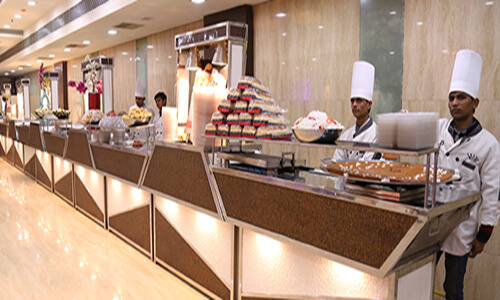
We have a specialized team of highly trained and experienced managers all from 5 stars, captains and other staff and they look after all of the needs of the guests. Our staff is dedicated, polite, courteous, neat and honest
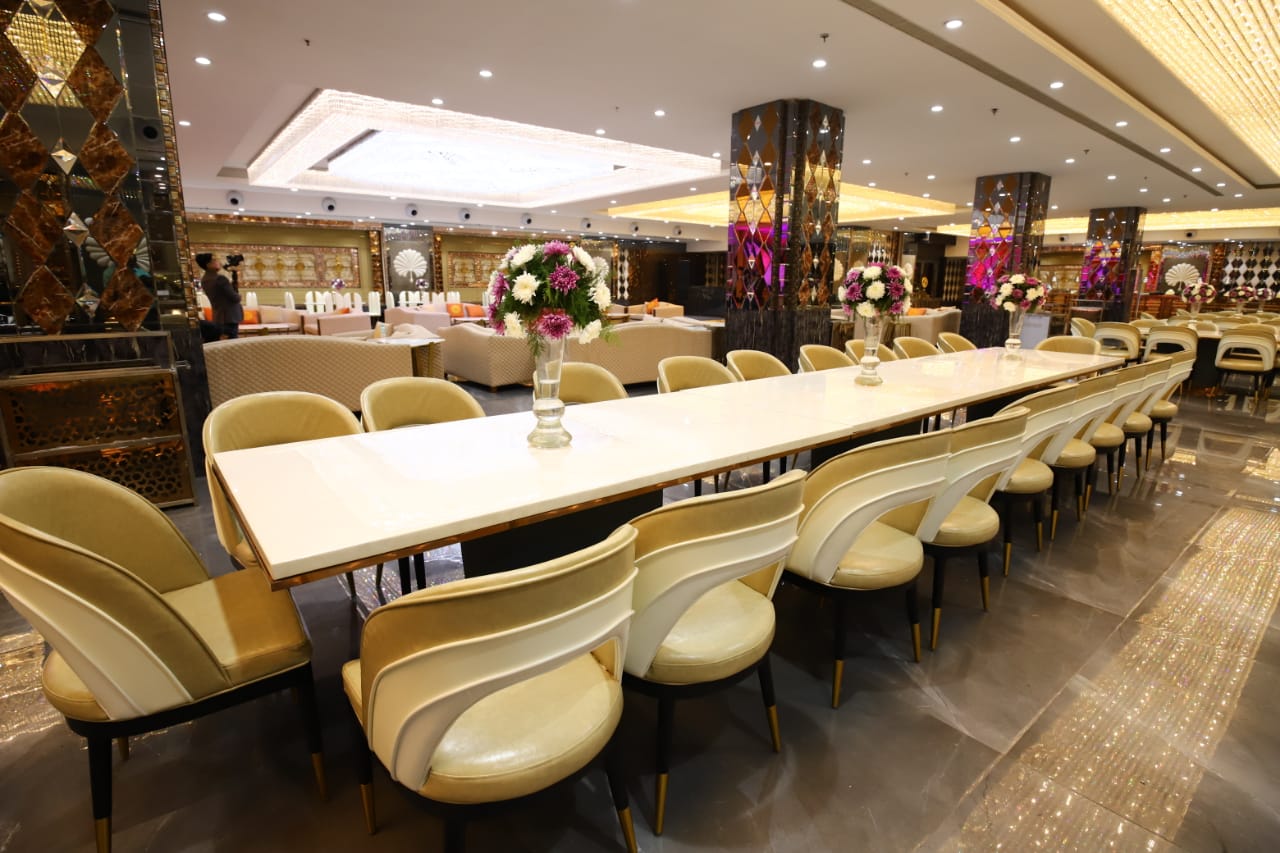
Spacious Elevators and escalated staircase is installed for convenience of our guests. All halls come with Bridle Room with lock for security of belongings of guest. Special Bar Counters
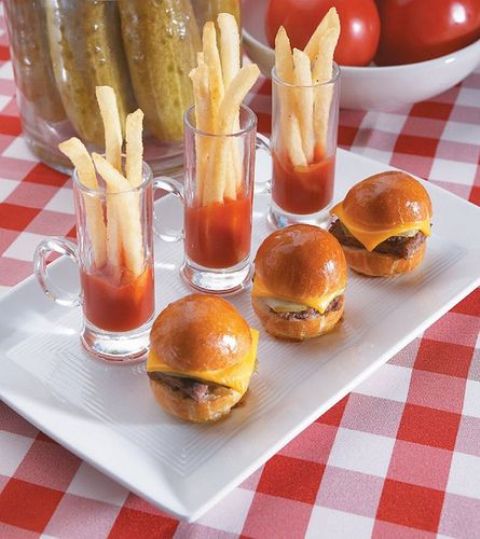
We are serving delicious snacks, some of them have been developed by our expert chefs, and they are our gift to the food industry. We serve full quantity of snacks from start till end of the function.
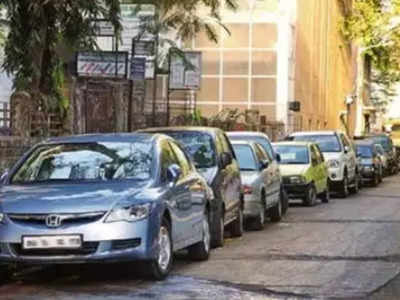
We provide ´Valet Parking´ facility at no extra cost to you. The cars of our guests shall be parked by our expert Valet parking drivers.

The richness of the ambience can be felt from the Cascading waterfalls, ornamental crystal chandeliers, beautiful Italian marble, light emitting onyx stone and ornate wood work. We have halls large enough to hold parties of 80 to 5000 guests. Beauty of our halls is unmatched in whole of East Delhi.
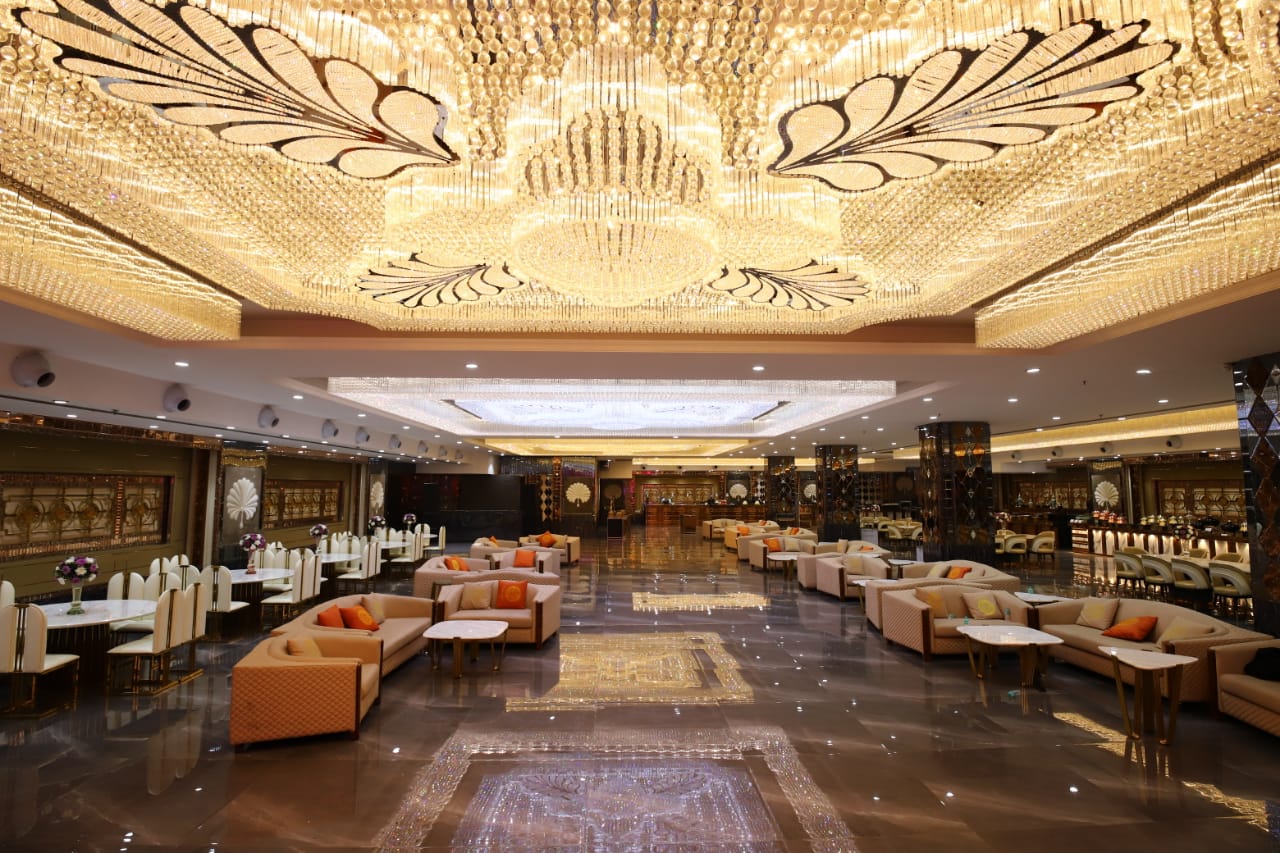
Our Banquet Halls are centrally Air-Conditioned. We run our AC on generators and hence it never stops and it is very effective in the middle of summer too.