
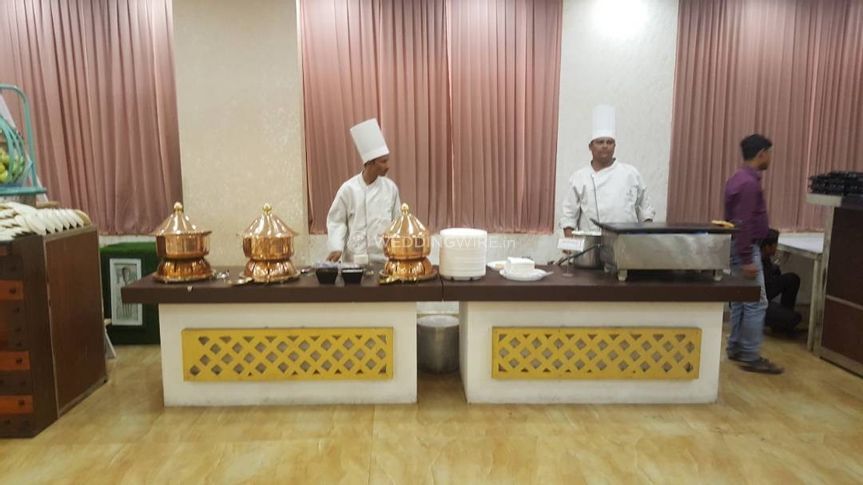
Organizing a Live Cooking Demo for Memorable Event Entertainment
Live cooking demonstrations have moved beyond trade shows and food festivals. Across Sydney, Melbourne and Brisbane, planners book chefs to cook in front of guests at weddings, corporate launches and milestone birthdays, turning a simple meal into theatre. The format makes the kitchen a stage, lets hosts entertain without scripted speeches, and gives attendees something to photograph and share.
When planned with care, a live station becomes the social anchor of the evening. Guests gather around the flames, the rhythm of a knife and the aroma of toasted spices, while the event continues around them. Done poorly, the same demo can hold up service and crowd a room. The difference lies in the planning done before the first plate goes out.
Defining the Concept and Setting Clear Goals
Before booking a chef, decide what the demo is meant to achieve. A wedding reception might use a live pasta or chaat station between ceremony and dance floor. A corporate function in a Sydney CBD hotel could feature a chef building canapés that reflect the brand. A fiftieth birthday in Adelaide may simply want a relaxed showpiece celebrating the guest of honour.
A clearer goal makes every later decision easier. A two-hour interactive format with audience participation calls for a different chef, layout and budget than a fifteen-minute theatre reveal timed to a cake cutting. Write the purpose in one sentence and use it as a filter for every menu and layout choice.
Picking a Chef and a Format That Fits
Australia's hospitality scene is unusually diverse, giving planners access to chefs trained in Italian, Japanese, modern Australian, South Indian, Thai and Levantine kitchens. Match the chef's background to the audience. A Melbourne crowd that loves brunch may enjoy shakshuka finished tableside; a Perth group might prefer a Western Australian rock lobster broken down in front of them.
The format shapes the room. A demonstration theatre needs clear sightlines, a microphone and a raised platform. A tasting station spreads guests along a long bench where small plates are finished one portion at a time. A roaming chef moves between tables with a portable induction setup. The table below compares the three most common formats.
| Format | Best for | Space needed | Audience size |
|---|---|---|---|
| Theatre-style demo | Corporate launches, product reveals | Stage, projector, microphone | 30–200 |
| Station-style tasting | Weddings, receptions, birthdays | Long bench, overhead extraction | 40–120 |
| Roaming chef | Intimate dinners, VIP tables | Small trolley or tray | Up to 30 |
Building a Menu That Travels Well
A live demo menu should look impressive but behave predictably. Ingredients must hold their texture under lights, portioning needs to be fast enough for a continuous flow, and finished plates should travel without collapsing. Pre-portioned proteins, par-cooked bases and finishing sauces in a bain-marie help a chef work at event pace.
Australia is a country of dietary nuance. Vegan, vegetarian, halal, gluten-free and nut-free guests are common at most gatherings, particularly in multicultural cities. Build the showpiece around one or two hero ingredients, then offer labelled alternatives so nobody feels like an afterthought. Where alcohol is part of the cooking, such as a flambé, keep a non-alcoholic version of the same sauce on hand.
Securing the Right Space and Layout
The venue has to do two jobs at once: feed guests comfortably and host a working kitchen. Look for ceiling height that handles extraction, a floor that can be wiped between courses, and power points that won't trip when the chef plugs in an induction hob. Guests at the back of the room should see the pan, not just smell it.
For larger gatherings, halls such as pearlgrandbananatree.com combine flexible floor plans with in-house catering and décor, which removes much of the supplier juggling a live demo usually demands.
Managing Equipment, Safety and Council Rules
A working kitchen in the middle of a function carries real obligations. Under Australian food safety law, anyone serving food to the public must operate under a registered food business and follow the Australia New Zealand Food Standards Code. Chefs handling allergens, raw meat or seafood need separate boards, gloves and wash stations.
Open flames and smoke add another layer. Most Australian councils require a temporary event permit for outdoor cooking in public spaces, and indoor venues usually ask for a fire safety plan listing extinguishers, exit routes and guest numbers. Confirm these details with the venue manager at least four weeks before the event.
Working the Demo Into the Event Schedule
A demo that runs too long will drain a room. One that runs too short will feel like a gimmick. Allot twenty to forty minutes of active cooking and another ten for plating, then build the rest of the evening around it. At a wedding, the demo can sit between entrée and main. At a corporate function, it works best after formalities, when guests are ready to mingle.
Coordinate the chef's timeline with the floor manager so speeches, cake cuttings and the demo do not collide. Audio cues, lighting cues and the position of waiting staff all need to be rehearsed, ideally in a full run-through the day before.
Creating Interaction and Lasting Memories
The strongest demos invite the room in. A chef who calls out a question, hands a wooden spoon to a guest or asks the birthday celebrant to choose the spice blend gives people a story to take home. Printed recipe cards, jars of the finishing salt or a QR code linking to the full method extend the moment long after the pans have been washed.
Encourage guests to film and tag the venue and the chef. Short vertical clips of a flambé, a knife technique or a dessert torching travel well on social media, doubling as organic marketing. With the right camera angle and lighting, even a phone recording can capture something polished enough to share.
Practical pointers for a smooth live demo
- Brief the chef on room size, ceiling height and power supply two weeks ahead.
- Confirm allergen, vegan and halal options in writing on the event order.
- Reserve a 3 m × 3 m zone with at least 1.5 m of clearance for guests.
- Schedule a full equipment test, including induction, extraction and audio, the day before.
- Keep a quiet backup plan, such as a pre-cooked tasting menu, in case of a power cut.
- Brief photographers on where to stand so they do not block sightlines.
- Build a ten-minute buffer into the run sheet between the demo and the next segment.
A live cooking demo rewards the same care you would put into any other piece of stagecraft. Choose a chef you trust, give them a clear brief, sort out the venue, menu and safety rules early, and let the room feel like guests have wandered into a working kitchen rather than a staged set. The memory that stays with people is rarely the dish itself; it is the moment they watched it come together, smelled the heat and shared the first bite with the people beside them.
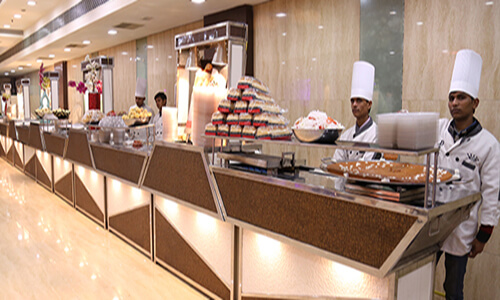
We have a specialized team of highly trained and experienced managers all from 5 stars, captains and other staff and they look after all of the needs of the guests. Our staff is dedicated, polite, courteous, neat and honest
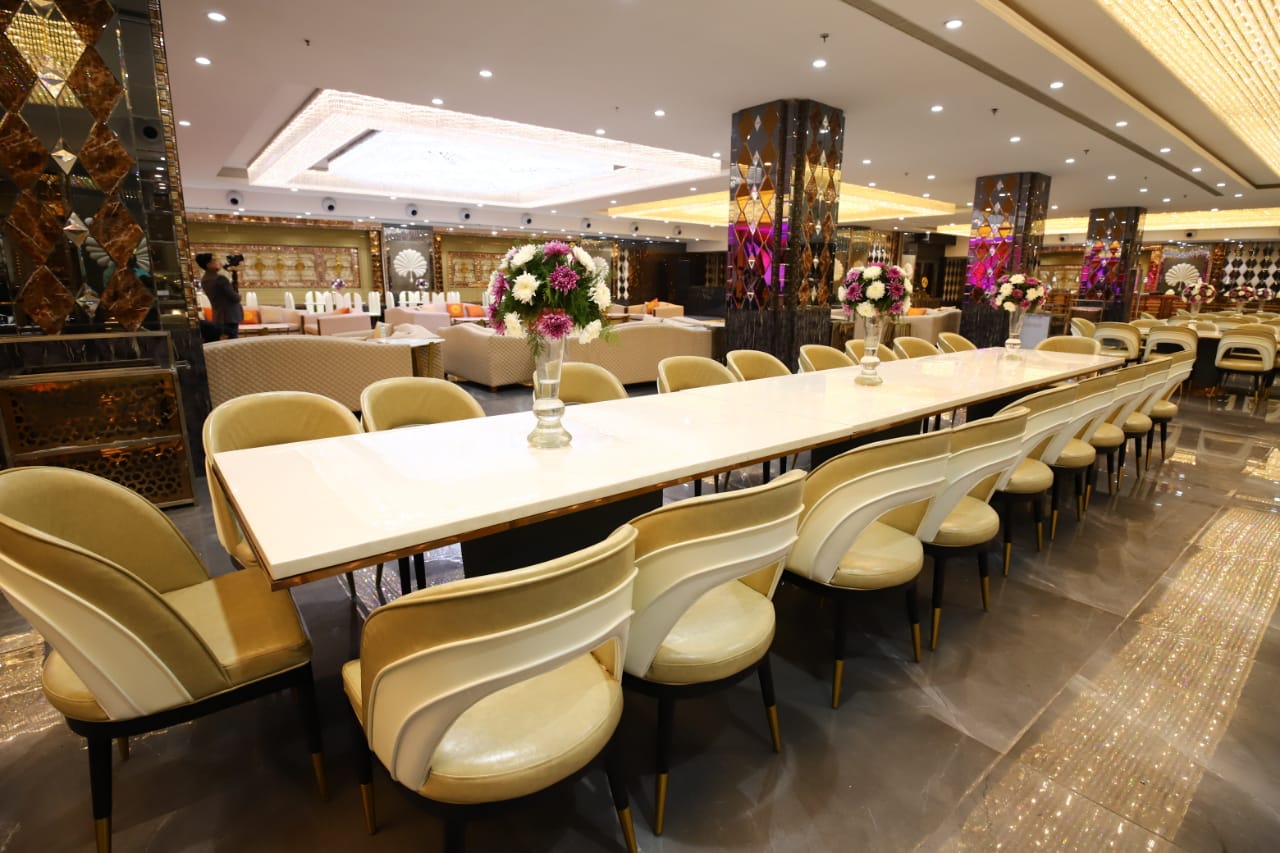
Spacious Elevators and escalated staircase is installed for convenience of our guests. All halls come with Bridle Room with lock for security of belongings of guest. Special Bar Counters
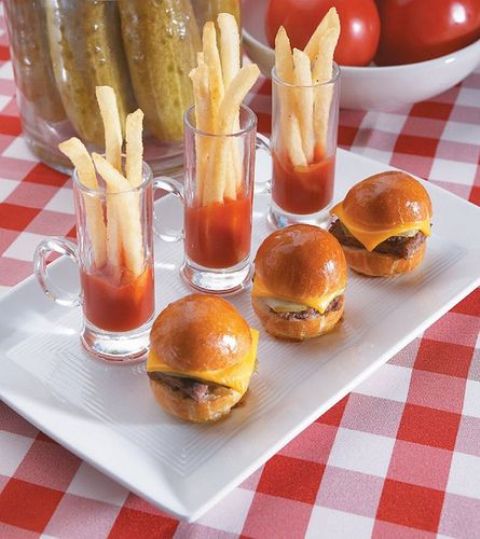
We are serving delicious snacks, some of them have been developed by our expert chefs, and they are our gift to the food industry. We serve full quantity of snacks from start till end of the function.
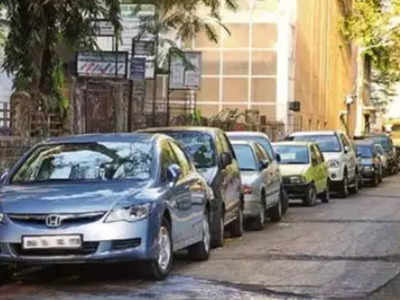
We provide ´Valet Parking´ facility at no extra cost to you. The cars of our guests shall be parked by our expert Valet parking drivers.

The richness of the ambience can be felt from the Cascading waterfalls, ornamental crystal chandeliers, beautiful Italian marble, light emitting onyx stone and ornate wood work. We have halls large enough to hold parties of 80 to 5000 guests. Beauty of our halls is unmatched in whole of East Delhi.
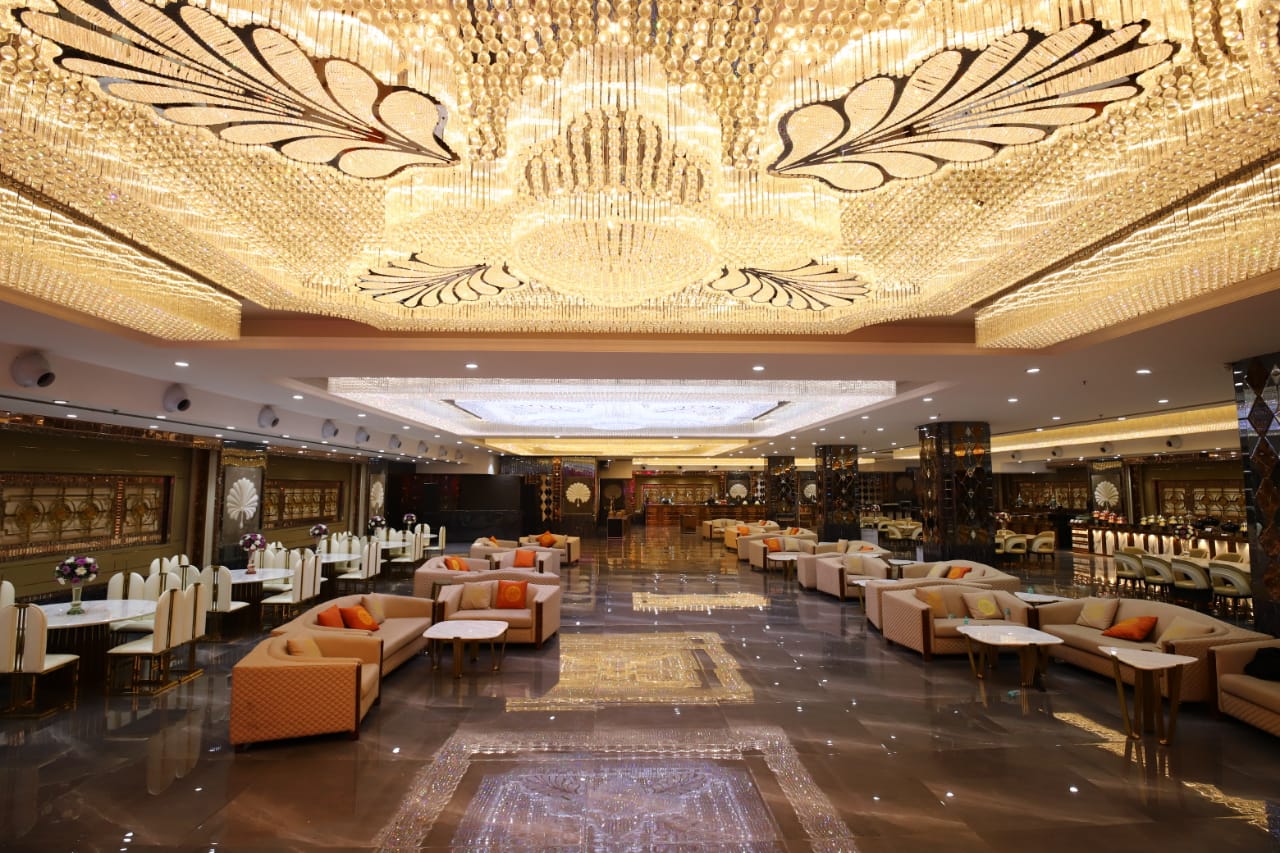
Our Banquet Halls are centrally Air-Conditioned. We run our AC on generators and hence it never stops and it is very effective in the middle of summer too.