
Community Art Exhibitions at Pearl Grand Banana Tree
A community art exhibition needs more than a room with empty walls. It needs a welcoming layout, reliable hospitality, suitable lighting, comfortable circulation and enough flexibility for artists, families, sponsors and visitors. Pearl Grand Banana Tree in Sahibabad, Ghaziabad, offers the scale and support needed to bring these elements together.
For an Australian community group, Indian-Australian association, school network or visiting arts organisation, the venue can provide a practical base for a cultural showcase. Artists from Melbourne, Sydney, Brisbane or Perth can present painting, photography, textiles, sculpture and mixed-media work while guests enjoy a shared social setting.
The venue is close to Kaushambi Metro Station and Pacific Mall, making access easier for local residents and visitors travelling through the Delhi-NCR area. Its large banquet spaces can accommodate an opening night, daytime exhibition, artist talks, workshops and a closing gathering without forcing every activity into the same arrangement.
Using our banquet hall for a community art exhibition works best when the event is planned as an experience rather than a simple display. The artwork, food, programme, visitor flow and atmosphere should support one another from the first arrival to the final conversation.
Shape the Exhibition Around the Space
Begin with the artistic purpose. A show about migration, local history, environmental change or shared cultural traditions may need a different layout from a school art display or a fundraiser. Decide whether visitors should follow a chronological path, move through themed areas or browse freely around a central reception space.
Banquet halls are often designed for celebrations, so use their openness to create clear exhibition zones. Place larger works where they can become visual anchors, while smaller pieces can sit along perimeter walls or on carefully positioned display panels. Leave generous aisles for prams, mobility aids and groups who may stop to talk.
Create a simple arrival point with registration, a printed floor plan and information about the artists. If guests are travelling from Australian cities or arriving with children during school holidays, visible wayfinding and a predictable programme can make the event easier to enjoy. A seating area also helps older visitors and guests who need a short break.
Build a Practical Display Plan
Before confirming the final layout, prepare an inventory of the artwork. Record dimensions, weights, hanging requirements, frame types, prices and insurance details. Identify pieces that must be kept away from food service, direct sunlight, high-traffic areas or young children.
Ask the venue team about available tables, chairs, staging, partitions, power points and lighting. A photography exhibition may need even illumination, while a textile or craft display may benefit from freestanding stands. If the collection includes sculpture, use stable plinths and position them so visitors cannot easily knock into them.
Allow time for installation and removal. Label each work clearly with the artist’s name, title, medium and price, if sales are part of the event. Australian organisations should also consider whether GST-inclusive pricing, tax invoices and written sales terms are needed for their bookkeeping. The Australian Consumer Law may apply to the organisation’s dealings with Australian buyers, even when the exhibition is held overseas.
Book early if the exhibition is planned during a popular wedding period or around major festivals. Reviewing these wedding-season planning tips can help organisers compare dates, expected demand and practical booking requirements before sending invitations.
Make Catering and Hospitality Part of the Experience
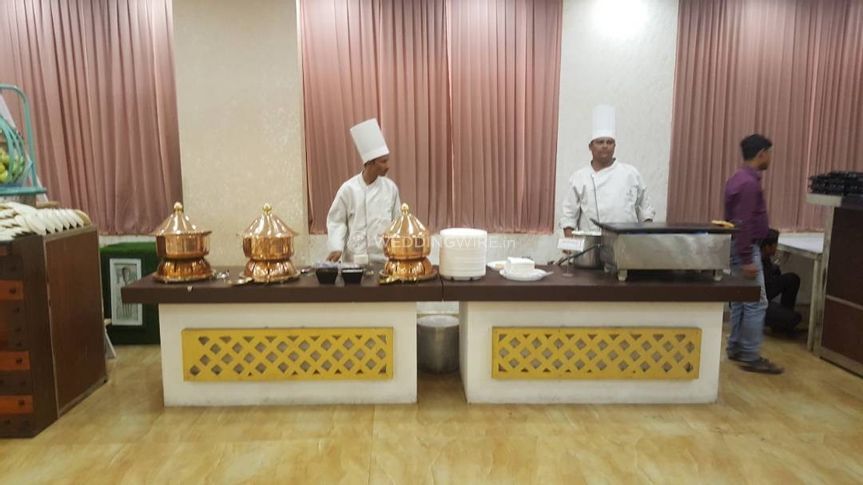
Food can extend the exhibition’s cultural story and encourage visitors to stay longer. Pearl Grand Banana Tree provides vegetarian multi-cuisine catering, allowing organisers to plan refreshments for an opening reception, a daytime family programme or an evening artist talk.
Keep the food service separate from delicate artworks and narrow viewing areas. A buffet can work well near the social section, while plated or individually served items may suit a formal opening. Include clear information about ingredients and provide choices for guests with allergies, dietary restrictions or different spice preferences.
Hospitality staff can assist with guest arrival, seating, service coordination and transitions between activities. For an Australian audience, familiar event habits such as an early evening start, clear RSVP details and accessible non-alcoholic drinks can make the programme feel organised. If alcohol is proposed, confirm venue policy and the relevant local licensing responsibilities well before promotion.
Protect the Event With Clear Local Planning
A community exhibition should have a written agreement covering access times, display equipment, catering, cleaning, security, payment schedules and cancellation terms. Ask who is responsible for artwork damage, public liability, electrical equipment and any temporary structures. Australian incorporated associations and charities commonly carry public liability insurance, and their own insurer may require overseas event details before providing cover.
Accessibility should be planned from the beginning rather than added after the floor plan is complete. Australian organisers may be guided by the Disability Discrimination Act 1992 and their organisation’s accessibility policy, while the venue team can advise on practical access within the premises. Keep routes unobstructed, provide seating and make captions or programme notes easy to read.
Confirm local permissions for signage, amplified sound, photography, sales, workshops and any collection of donations. If the exhibition includes children’s activities, establish supervision arrangements and obtain appropriate consent. A short risk assessment should cover trip hazards, crowd movement, emergency exits, hot food, valuable works and first-aid arrangements.
Planning Details Worth Confirming
A concise checklist keeps the exhibition manageable for organisers, artists and venue staff:
- Confirm the date, access hours, installation window and collection time.
- Share a scaled floor plan showing artworks, food service, seating, registration and exits.
- Arrange artwork insurance, public liability cover and written sales conditions.
- Confirm vegetarian menus, allergy information, water stations and non-alcoholic drinks.
- Prepare captions, artist biographies, price labels, signs and a visitor information sheet.
- Nominate one event manager to coordinate the venue, artists, caterers and volunteers.
Create a Welcoming Community Programme
An exhibition becomes more engaging when visitors have reasons to meet the people behind the work. Consider an opening address, short artist talks, a live demonstration, a children’s collage table or a panel about cultural exchange. Keep talks concise and schedule them away from peak food service so guests can listen comfortably.
Community groups can invite local schools, art teachers, resident associations, Indian-Australian networks and nearby businesses. A Melbourne-based arts collective might present work alongside Ghaziabad artists, while a Sydney community organisation could use the event to build connections with relatives, cultural partners or education groups in the region.
Promote the exhibition with accurate details about opening hours, transport, accessibility, entry fees and photography rules. Mention the nearby metro station and Pacific Mall when providing directions. A digital invitation, WhatsApp updates and printed notices can work together, especially when the audience includes families who rely on direct community communication.
The strongest exhibitions balance visual impact with comfort and conversation. When the layout is easy to navigate, the catering is thoughtfully timed and responsibilities are clear, Pearl Grand Banana Tree can support a polished cultural gathering that feels generous and community-led. What visitors should remember is the quality of the artwork, the warmth of the welcome and the shared story the exhibition made possible.
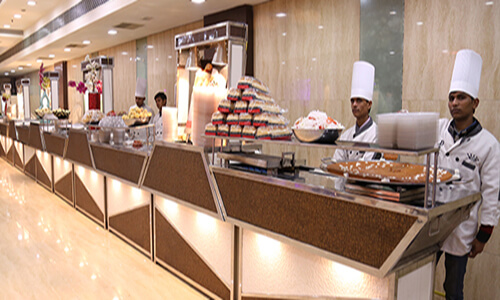
We have a specialized team of highly trained and experienced managers all from 5 stars, captains and other staff and they look after all of the needs of the guests. Our staff is dedicated, polite, courteous, neat and honest
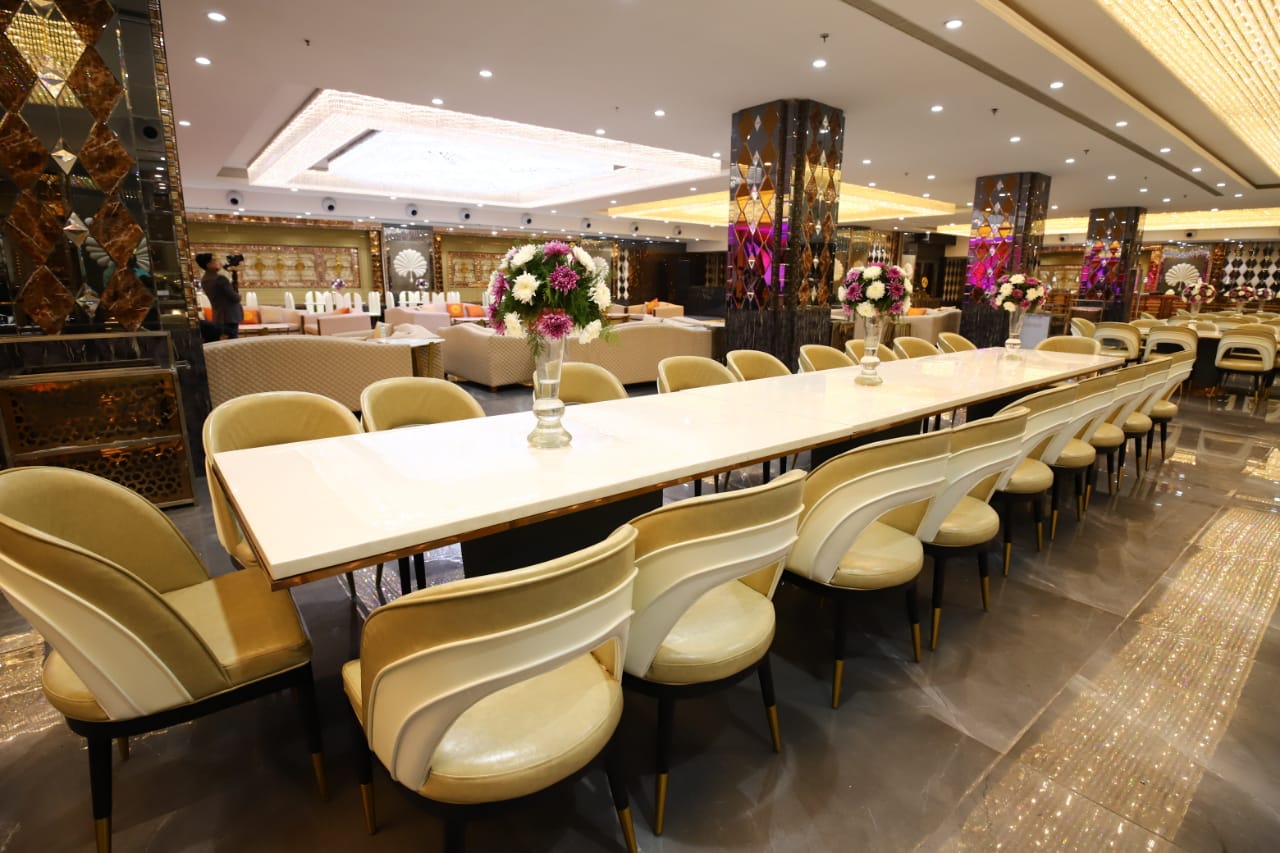
Spacious Elevators and escalated staircase is installed for convenience of our guests. All halls come with Bridle Room with lock for security of belongings of guest. Special Bar Counters

We are serving delicious snacks, some of them have been developed by our expert chefs, and they are our gift to the food industry. We serve full quantity of snacks from start till end of the function.
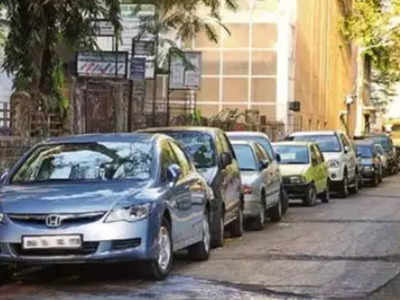
We provide ´Valet Parking´ facility at no extra cost to you. The cars of our guests shall be parked by our expert Valet parking drivers.

The richness of the ambience can be felt from the Cascading waterfalls, ornamental crystal chandeliers, beautiful Italian marble, light emitting onyx stone and ornate wood work. We have halls large enough to hold parties of 80 to 5000 guests. Beauty of our halls is unmatched in whole of East Delhi.
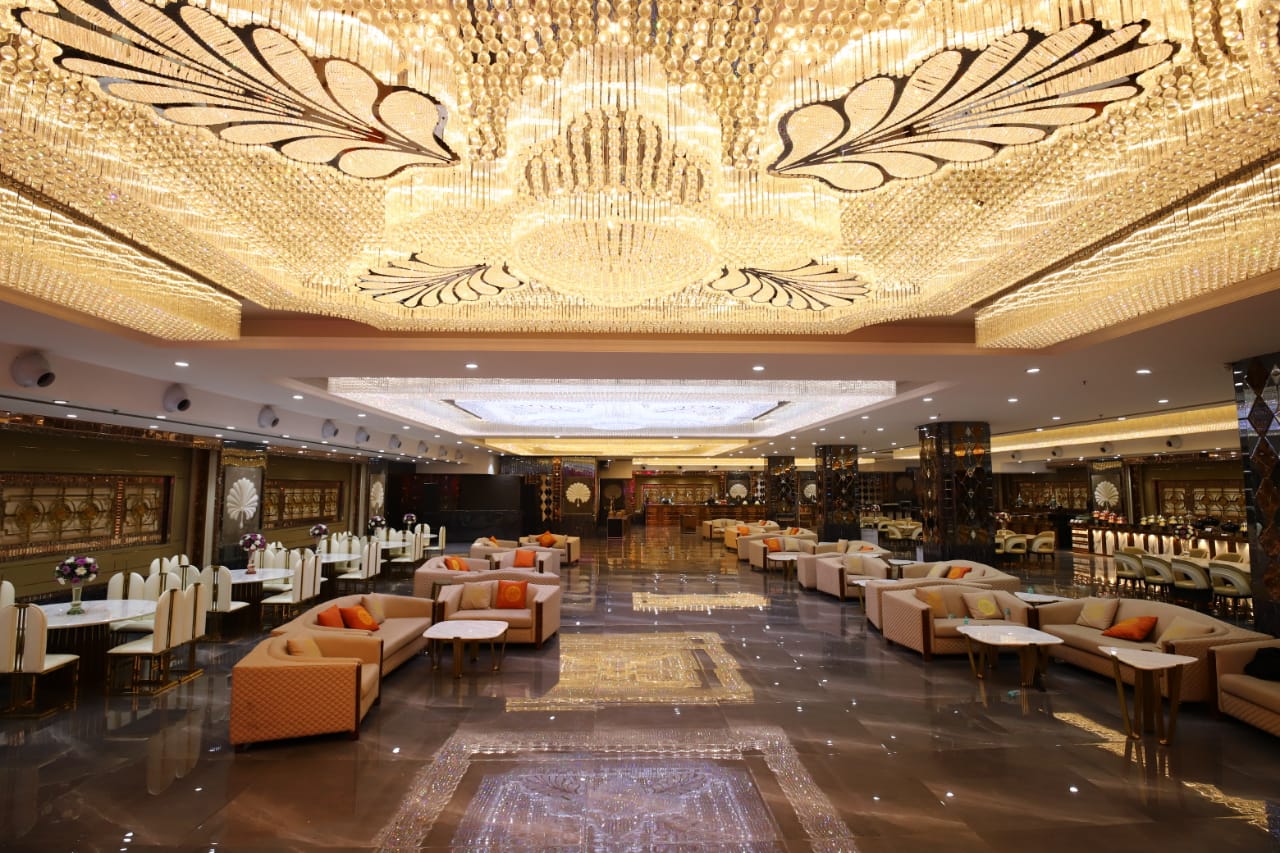
Our Banquet Halls are centrally Air-Conditioned. We run our AC on generators and hence it never stops and it is very effective in the middle of summer too.